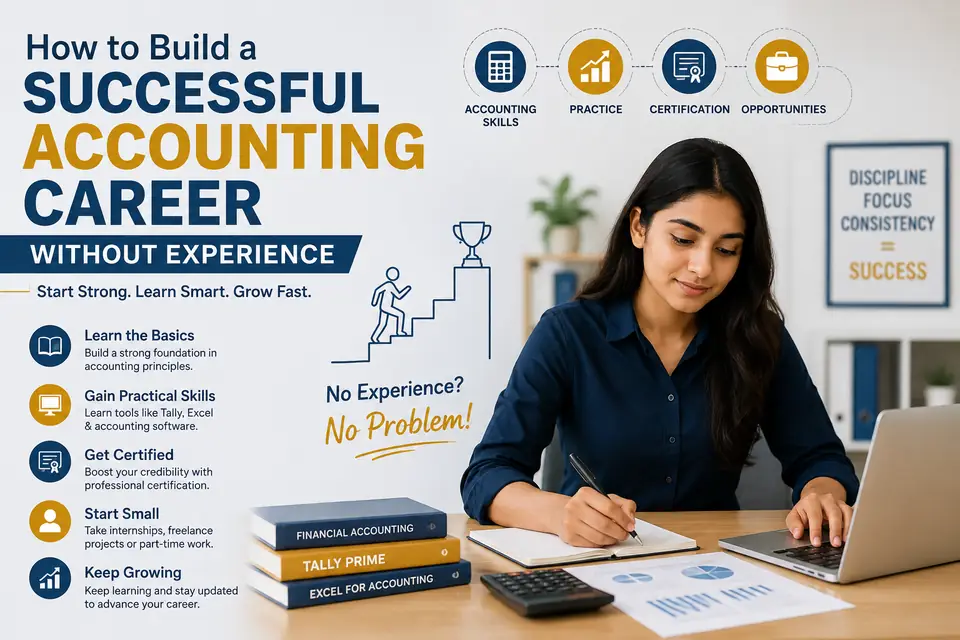
Starting an accounting career without work experience can feel challenging, especially when many job descriptions mention experience as a requirement. However, freshers can still build a successful career by developing practical accounting skills, learning industry-relevant software, and gaining confidence through hands-on practice.
Whether you have recently completed your graduation or are looking for a career change, the right skills and preparation can help you take your first step into the accounting field.
1. Learn the Basics of Accounting
Before applying for accounting jobs, it is important to understand fundamental accounting concepts. Learn topics such as:
- Journal entries
- Ledger accounts
- Trial balance
- Profit and loss statements
- Balance sheets
- Bank reconciliation
- Accounts payable and receivable
- Basic taxation concepts
A strong understanding of accounting fundamentals gives you a foundation for handling practical work.
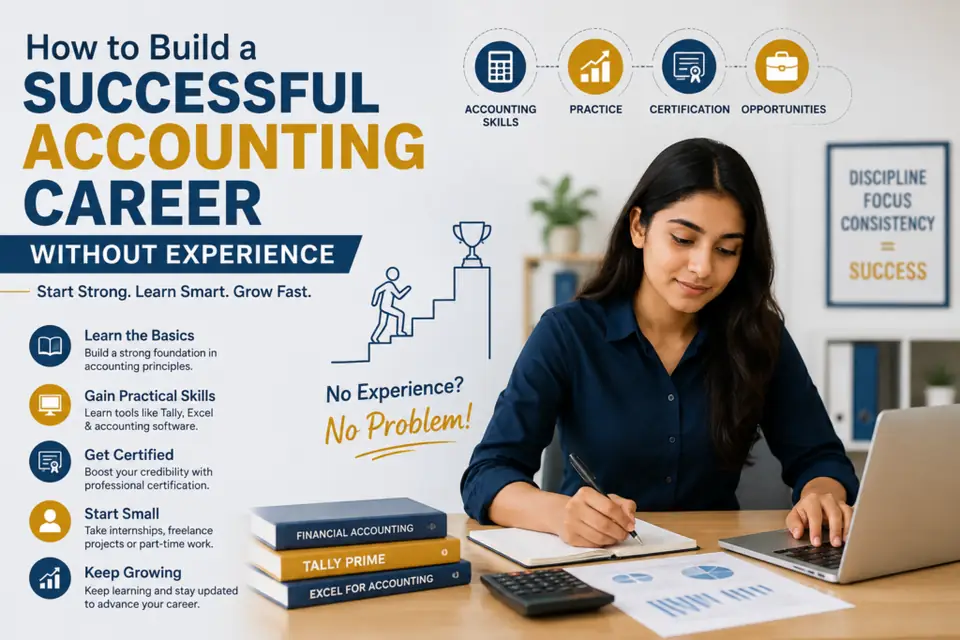
2. Develop Practical Accounting Skills
Employers often look for candidates who can apply their knowledge to real business situations. Instead of focusing only on theory, practice common accounting tasks.
For example, you can practice recording sales and purchase transactions, preparing invoices, maintaining ledgers, and reconciling bank statements.
Practical knowledge can make you more confident when applying for entry-level accounting positions.
3. Learn Tally and Other Accounting Software
Accounting has become increasingly digital, so knowledge of accounting software can be valuable for freshers.
Learning Tally, along with other commonly used accounting tools, can help you understand how businesses maintain financial records electronically. You should practice creating companies, recording transactions, managing ledgers, preparing reports, and working with GST-related transactions.
4. Improve Your Excel Skills
Excel is another useful skill for accounting professionals. Start with basic functions and gradually learn more advanced features.
Important Excel skills for accounting students include:
- SUM and AVERAGE
- IF functions
- Sorting and filtering
- VLOOKUP/XLOOKUP
- Pivot tables
- Basic data formatting
- Financial calculations
Strong Excel skills can help you manage and analyze accounting data more efficiently.
5. Understand GST and Basic Tax Concepts
Knowledge of GST can be useful when starting an accounting career in India. Beginners should understand concepts such as GST invoices, input tax credit, CGST, SGST, IGST, and basic GST compliance.
You don't need to become a tax expert immediately. Start with the fundamentals and gradually build your knowledge through practical examples.
6. Consider a Job-Oriented Accounting Course
A structured course can help bridge the gap between academic knowledge and workplace requirements. A Certified Accounts Professional (CAP) Course can be considered by students and freshers who want to develop practical accounting knowledge.
A job-oriented accounting course may cover areas such as accounting fundamentals, Tally, GST, Excel, and practical business transactions. This type of training can help beginners build relevant skills before entering the workplace.
7. Create Practical Projects
If you don't have professional experience, practical projects can demonstrate what you know.
For example, create a sample business and practice:
- Recording purchase and sales transactions
- Creating customer and supplier ledgers
- Preparing invoices
- Recording expenses
- Reconciling bank transactions
- Preparing a trial balance
- Generating basic financial reports
These projects can give you practical exposure and provide examples to discuss during interviews.
Learn this practically at Yash Skill Hub
Free counselling and a demo class at our Vishwas Nagar centre. Tally, GST, TDS and Excel on real company data.
8. Build a Strong Fresher Resume
Your resume doesn't have to depend entirely on work experience. Highlight your education, accounting skills, software knowledge, certifications, and practical projects.
For example, instead of simply writing "Basic Excel Knowledge," mention the specific skills you have learned, such as formulas, sorting, filtering, and pivot tables.
A clear and skill-focused resume can help recruiters understand your capabilities quickly.
9. Apply for Entry-Level Accounting Roles
Freshers should look for positions that match their current skill level. Some entry-level opportunities may include:
- Junior Accountant
- Accounts Assistant
- Accounting Executive
- Billing Executive
- Accounts Payable Assistant
- Accounts Receivable Assistant
- Tally Operator
Don't wait until you feel you know everything. Continue learning while applying for suitable entry-level opportunities.
10. Prepare for Accounting Interviews
Interview preparation is especially important when you don't have previous work experience. Employers may ask questions about accounting concepts as well as practical situations.
Prepare questions related to:
- Journal entries
- GST
- Tally
- Excel
- Bank reconciliation
- Debit and credit
- Trial balance
- Profit and loss
- Balance sheet
Practice explaining your answers clearly and confidently. If you have completed practical projects or training, use examples to demonstrate your knowledge.
11. Keep Learning and Improving
Accounting is a field where continuous learning can help you grow. As you gain experience, you can develop additional knowledge in taxation, payroll, financial reporting, auditing, and other areas.
You can also improve your communication, analytical thinking, and problem-solving skills because these abilities can be useful in accounting roles.
12. Build Your Accounting Career Step by Step
Building an accounting career does not happen overnight. Freshers should focus on developing one skill at a time and gaining confidence through regular practice. Start with accounting fundamentals, then learn Tally, GST, Excel, and other practical accounting tools. A step-by-step approach can make it easier to begin your accounting career without previous work experience.
13. Gain Confidence Through Practical Training
Practical training can play an important role in starting an accounting career. Instead of only reading accounting concepts, try working on sample business transactions and financial records. Practical exposure helps you understand how accounting tasks are performed in real-world situations and can prepare you for your first accounting job.
14. Choose the Right Accounting Career Path
The accounting field offers different career paths for beginners. Depending on your interests and skills, you can explore bookkeeping, taxation, payroll, accounts payable, accounts receivable, or financial reporting. Understanding these options can help you choose an accounting career that matches your strengths and long-term goals.
15. Develop Communication Skills
Technical knowledge is important, but communication skills can also support your accounting career. Accounting professionals often communicate with managers, clients, suppliers, and other departments. Improving your communication skills can help you explain financial information clearly and work more effectively in a professional environment.
16. Use Certifications to Strengthen Your Profile
Relevant certifications can help freshers demonstrate their interest in accounting and improve their professional profile. A job-oriented accounting certification can provide structured learning and practical exposure. For someone starting an accounting career, certifications can complement academic qualifications and help showcase relevant skills to potential employers.
17. Start Applying Even Without Experience
Many freshers delay their job search because they believe they need experience first. However, applying for suitable entry-level positions while continuing to learn can help you gain valuable exposure. Your first job may become an important foundation for your accounting career, allowing you to develop workplace skills and understand professional accounting practices.
18. Build Long-Term Accounting Career Goals
Once you enter the accounting field, think about where you want your accounting career to go. You may later specialize in taxation, auditing, financial analysis, payroll, or other areas. Setting clear career goals can help you decide which skills, courses, and professional experiences to pursue as you grow.
19. Stay Updated With Accounting Trends
The accounting profession continues to evolve with new software, digital processes, taxation updates, and automation. Staying updated can give you an advantage as you develop your accounting career. Regular learning and improving your technical skills can help you remain prepared for changing workplace requirements.