Finance and Accounting Diploma: An Overview
A Finance and Accounting Diploma can be a practical choice for students, graduates, freshers, and working professionals who want to develop accounting and finance-related skills. Modern businesses require professionals who can maintain financial records, manage transactions, prepare reports, work with accounting software, and support taxation-related activities.
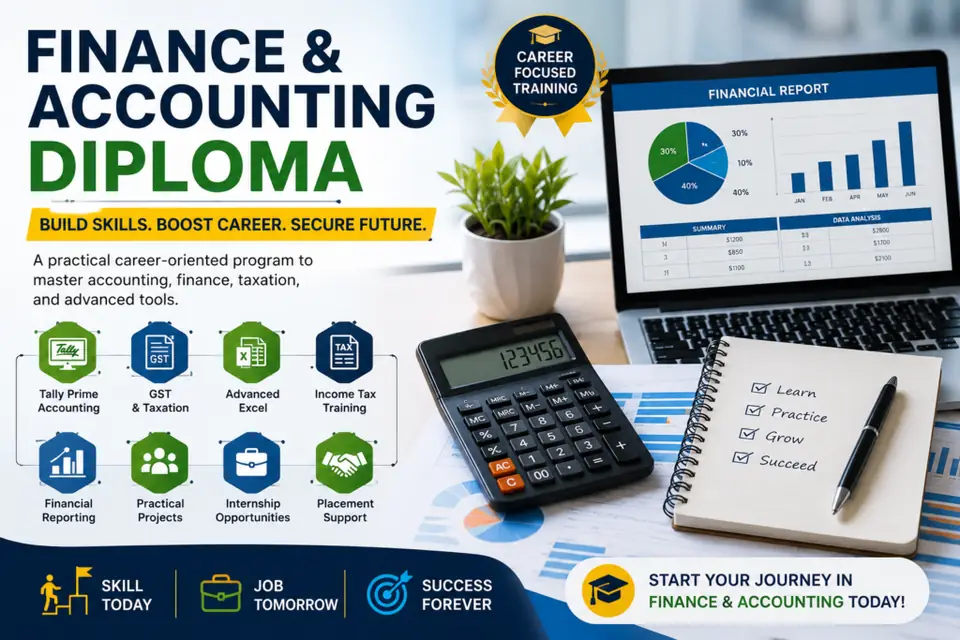
A well-structured Finance and Accounting Diploma can combine accounting concepts with practical training in areas such as Tally Prime, GST, Income Tax, Advanced Excel, bookkeeping, financial reporting, payroll, and business transactions.
Unlike learning accounting concepts only from textbooks, practical training can help learners understand how financial processes are handled in professional environments.
At Yash Skill Hub, our approach focuses on practical and career-oriented accounting and taxation training designed to help learners develop relevant technical and professional skills.
Before enrolling, however, it is important to understand the Finance and Accounting Diploma eligibility, skills, syllabus, fees, and career scope.
What Is a Finance and Accounting Diploma?
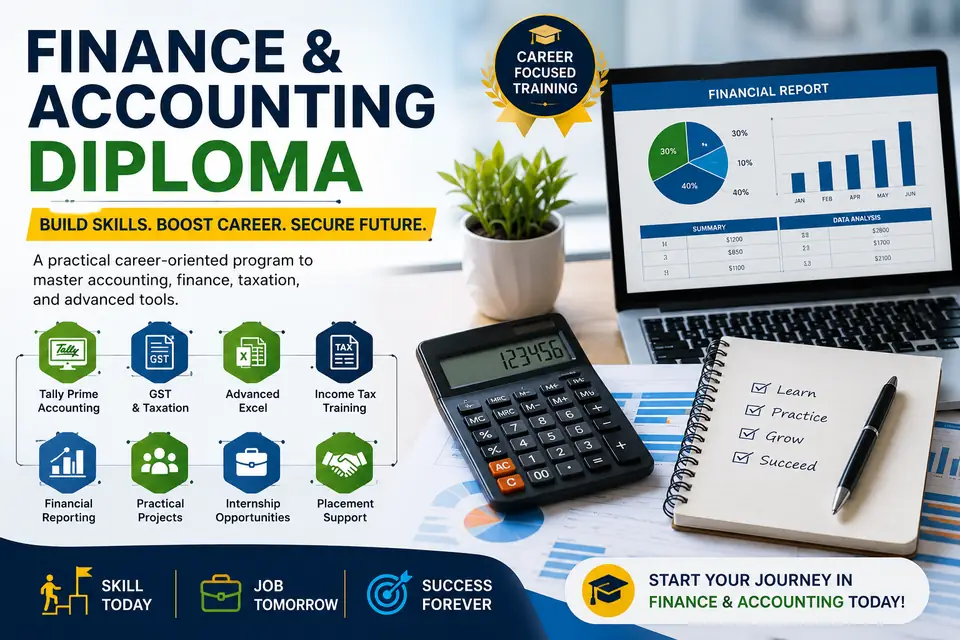
A Finance and Accounting Diploma is a career-focused program designed to provide learners with foundational and practical knowledge of accounting and finance.
Depending on the curriculum, students may learn:
- Accounting fundamentals
- Bookkeeping
- Financial statements
- Tally Prime
- GST
- Income Tax
- Advanced Excel
- Payroll
- Financial reporting
- Business transactions
- Basic financial analysis
The objective of a Finance and Accounting is generally to help learners understand both the concepts and practical applications of accounting.
For freshers, this can provide a structured introduction to the accounting profession. For graduates and working professionals, it can complement existing education and help strengthen technical skills.
Finance and Accounting Diploma Eligibility
One of the first questions students ask before joining a course is about eligibility.
The Finance and Accounting eligibility can vary depending on the institute and specific program. Generally, programs of this type may be suitable for:
- 12th-pass students
- Commerce students
- B.Com graduates
- Other graduates
- Freshers
- Working professionals
- Individuals interested in accounting and finance
Commerce students may already have some familiarity with accounting concepts, while students from other backgrounds may need to build their understanding from the fundamentals.
Before enrolling in a Finance and Accounting, always check the specific eligibility criteria, duration, admission requirements, and curriculum offered by the institute.
7 Powerful Things to Know Before Choosing a Finance and Accounting Diploma
Choosing an accounting program is an important decision. Instead of looking only at the course name, consider what you will actually learn and how the training can support your professional development.
Here are seven important things to consider.
1. Finance and Accounting Diploma Should Include Practical Accounting
A good Finance and Accounting should ideally go beyond basic accounting theory.
Practical accounting training can introduce learners to activities such as:
- Recording transactions
- Preparing journal entries
- Maintaining ledgers
- Creating trial balances
- Preparing financial statements
- Managing invoices
- Recording purchase and sales transactions
- Maintaining accounting records
Practical assignments can help learners understand how accounting concepts are applied in actual business situations.
This can be particularly useful for freshers who have academic knowledge but limited workplace exposure.
2. Finance and Accounting Diploma Should Cover Accounting Software
Accounting work today is closely connected with software and digital tools.
Therefore, when comparing a Finance and Accounting, check whether the curriculum provides practical exposure to commonly used tools.
Training may include:
Tally Prime
Tally Prime can help learners understand computerized accounting, transactions, ledgers, reports, and other accounting processes.
Busy
Busy can provide additional exposure to accounting and business management processes.
SAP
Basic exposure to SAP can help learners understand how financial information may be managed in larger business environments.
Advanced Excel
Excel is particularly useful for accounting, reporting, data management, calculations, and MIS-related work.
At Yash Skill Hub, learners can receive exposure to Tally Prime, Busy, SAP, and Advanced Excel, along with accounting and taxation concepts.
Finance and Accounting Diploma Skills You Can Develop
The skills you develop through a Finance and Accounting can play an important role in your professional profile.
Important skills may include:
Accounting Skills
You can develop an understanding of bookkeeping, journal entries, ledgers, trial balances, financial statements, and business transactions.
Taxation Skills
Knowledge of GST and Income Tax can help learners understand taxation-related accounting processes.
Excel Skills
Advanced Excel can help with financial calculations, reports, data management, MIS, and analysis.
Financial Reporting Skills
Understanding financial reports can help professionals work with business information more effectively.
Communication Skills
Accounting professionals often interact with managers, clients, vendors, and other departments. Communication skills can therefore complement technical knowledge.
Analytical Skills
Working with financial information can help learners develop greater attention to detail and analytical thinking.
Finance and Accounting Diploma Syllabus: What Can You Learn?
The exact syllabus depends on the institute and program structure, but a practical Finance and Accounting Diploma may cover the following areas:
| Module | Key Learning Areas |
|---|---|
| Accounting Fundamentals | Journal, ledger, trial balance |
| Bookkeeping | Transactions and financial records |
| Tally Prime | Computerized accounting |
| GST | GST concepts and accounting |
| Income Tax | Basic taxation concepts |
| Advanced Excel | Reports, calculations and data |
| Payroll | Salary and employee records |
| Financial Reporting | Business and financial reports |
| SAP | Basic exposure to business software |
| Practical Projects | Applying accounting concepts |
A syllabus that combines theory + software + taxation + practical assignments can provide a more balanced learning experience.
Finance and Accounting Diploma Fees: What Should You Check?
Course fees can vary depending on several factors, including:
- Course duration
- Curriculum
- Training format
- Practical exposure
- Software included
- Certification
- Trainer experience
- Internship opportunities
- Career support
Therefore, there is no single fee applicable to every Finance and Accounting Diploma.
Instead of choosing a course only because it has a lower fee, compare the overall value of the program.
Ask whether the fee includes practical training, software training, certification, projects, internship opportunities, and placement assistance.
Finance and Accounting Diploma Career Scope
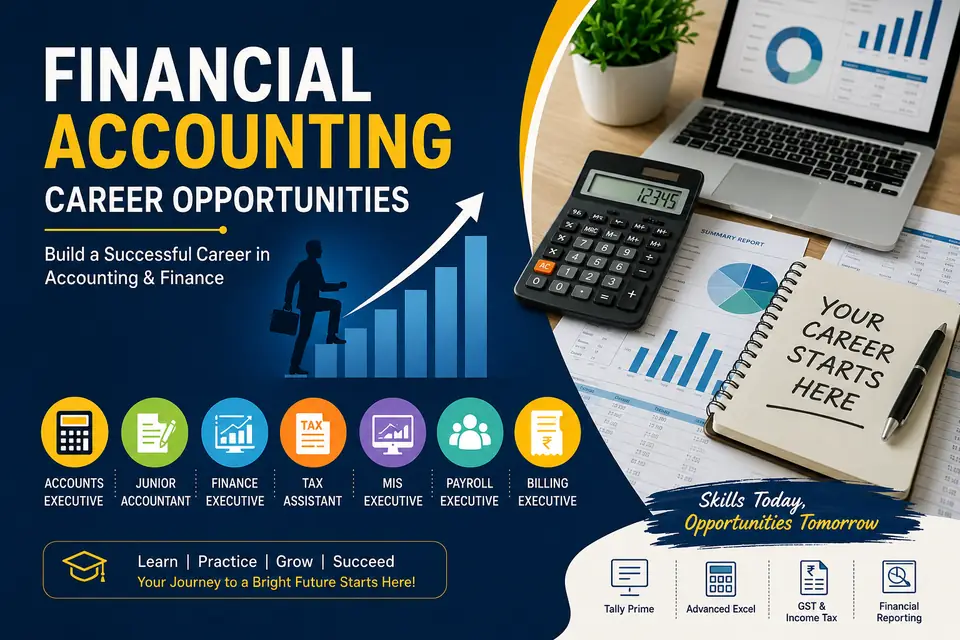
The Finance and Accounting career scope can include different entry-level accounting, finance, taxation, reporting, and administrative positions.
Depending on your qualifications, skills, experience, and employer requirements, you may explore roles such as:
- Accounts Executive
- Junior Accountant
- Accounts Assistant
- Finance Executive
- Tax Assistant
- MIS Executive
- Payroll Executive
- Billing Executive
The actual responsibilities and eligibility requirements will vary between organizations.
A diploma can provide foundational knowledge, but practical experience and continued skill development can be equally important for long-term career growth.
Learn this practically at Yash Skill Hub
Free counselling and a demo class at our Vishwas Nagar centre. Tally, GST, TDS and Excel on real company data.
Finance and Accounting Diploma Jobs for Freshers
Freshers often look for accounting courses that can help them develop job-oriented skills.
A Finance and Accounting Diploma can help freshers build knowledge in areas such as:
- Accounting software
- Bookkeeping
- GST
- Income Tax
- Advanced Excel
- Financial reporting
- Business transactions
After developing these skills, freshers can explore suitable entry-level positions based on their qualifications and employer requirements.
For example, an Accounts Assistant may support bookkeeping and documentation, while an MIS Executive may work with Excel and business reports.
Finance and Accounting Diploma for B.Com Graduates
B.Com graduates already have an academic foundation in commerce and accounting. However, they may want additional practical exposure to accounting software, taxation, Excel, and financial processes.
A Finance and Accounting Diploma can complement a B.Com qualification by helping graduates strengthen practical skills.
For example, a B.Com graduate may already understand accounting principles but may want more hands-on exposure to:
- Tally Prime
- GST
- Income Tax
- Advanced Excel
- Financial reporting
- Practical accounting projects
This combination of academic education and practical training can help graduates build a broader professional profile.
Finance and Accounting Diploma for Working Professionals
Working professionals may also consider a Finance and Accounting Diploma when they want to strengthen their existing skill set.
For example, professionals working in administration, operations, sales, business management, or small businesses may benefit from understanding financial processes.
Accounting knowledge can help them better understand:
- Business expenses
- Revenue
- Profitability
- Financial reports
- Invoices
- Payments
- Budgeting
- Business transactions
Additional training can therefore complement existing professional experience without necessarily requiring a complete career change.
Career Options After a Finance and Accounting Diploma
There are several potential career options after completing a Finance and Accounting Diploma, depending on your skills and experience.
Accounts Executive
Accounts Executives may handle daily accounting activities, invoices, transactions, financial records, and reports.
Junior Accountant
Junior Accountants may assist with bookkeeping, ledgers, reconciliations, and financial documentation.
Finance Executive
Finance Executives may work with financial information, transactions, reports, and business expenses.
Tax Assistant
Tax Assistants may support GST, Income Tax documentation, financial records, and basic taxation processes.
MIS Executive
Candidates with strong Excel and reporting skills can explore MIS-related positions.
Payroll Executive
Payroll professionals may work with salary information, employee records, deductions, and payroll reports.
Billing Executive
Billing professionals may manage invoices, customer transactions, payment records, and billing documentation.
Actual career opportunities depend on the requirements of individual employers.
How to Choose the Right Finance and Accounting Diploma
Before enrolling in a Finance and Accounting, compare the following factors carefully:
Practical Training
Does the course include assignments and real-world accounting exercises?
Software Training
Does it cover Tally Prime, Excel, Busy, or other relevant software?
Taxation
Does the curriculum include GST and Income Tax?
Projects
Will you have opportunities to apply your learning through practical projects?
Career Support
Does the institute provide interview preparation, internship opportunities, or placement assistance?
Trainers
Do the trainers have relevant accounting and industry experience?
Certification
Understand what certification you receive after completing the program.
These factors can make the learning experience more useful and career-focused.
Why Choose Yash Skill Hub for a Finance and Accounting Diploma?
At Yash Skill Hub, our approach focuses on practical and career-oriented accounting and taxation training.
Learners can receive exposure to:
- Tally Prime
- Busy
- GST
- Income Tax
- SAP
- Advanced Excel
- Accounting fundamentals
- Financial processes
- Practical projects
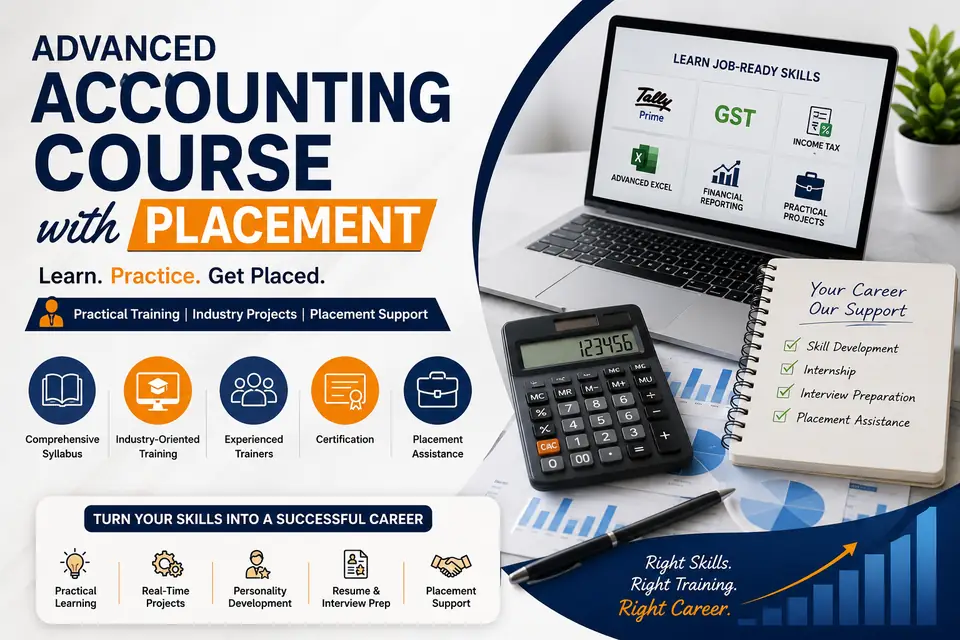
Yash Skill Hub also emphasizes personality-development sessions, internship opportunities, and placement-related support.
The institute states that it is an ISO-certified institute and an Authorized Tally Partner, with its offline training centre located in Vishwas Nagar, Shahdara, Delhi.
For learners considering a Finance and Accounting Diploma, choosing an institute that combines technical learning with practical exposure can provide a more structured learning experience.
Finance and Accounting Diploma vs Traditional Accounting Learning
Traditional accounting education can provide valuable theoretical knowledge. However, many learners also want practical exposure to accounting software, taxation, Excel, and workplace processes.
A Finance and Accounting can combine several of these areas into one structured program.
| Traditional Learning | Finance and Accounting Diploma |
|---|---|
| Focus may be mainly theoretical | Theory + practical exposure |
| Limited software practice | Accounting software training |
| Academic accounting concepts | Workplace-oriented accounting |
| Limited project exposure | Practical assignments and projects |
| May not focus on career support | Can include career-related support |
The actual learning experience depends on the institute and curriculum, so students should compare programs before making a decision.
Is a Finance and Accounting Diploma Worth It?
A Finance and Accounting Diploma can be a useful option for learners who want to develop practical accounting and finance skills.
It can be particularly valuable when combined with:
- Tally Prime
- Advanced Excel
- GST
- Income Tax
- Bookkeeping
- Financial reporting
- Communication skills
- Practical projects
However, completing a diploma does not guarantee a job or specific salary. Your career opportunities depend on your qualifications, practical skills, experience, interview performance, and individual employer requirements.
The best approach is to treat the diploma as a foundation and continue developing your skills through practical experience and continuous learning.
Final Thoughts
A Finance and Accounting Diploma can provide a structured path for learners who want to develop practical knowledge of accounting, taxation, software, Excel, and financial reporting.
The course can be relevant for 12th-pass students, freshers, B.Com graduates, working professionals, and individuals interested in accounting and finance, depending on the institute's eligibility requirements.
Potential career paths include Accounts Executive, Junior Accountant, Accounts Assistant, Finance Executive, Tax Assistant, MIS Executive, Payroll Executive, and Billing Executive.
At Yash Skill Hub, learners can develop practical skills in Tally Prime, Busy, GST, Income Tax, SAP, Advanced Excel, accounting, and financial processes, along with professional-development and placement-related support.
If you are comparing accounting programs, focus not only on the course name but also on the syllabus, practical training, software exposure, projects, trainers, certification, internship opportunities, and career support.
Frequently Asked Questions
1. What is a Finance and Accounting Diploma?
A Finance and Accounting Diploma is a career-focused program that can provide knowledge of accounting, finance, taxation, accounting software, Excel, and financial reporting.
2. What is the eligibility for a Finance and Accounting Diploma?
Eligibility varies by institute. Many programs may be suitable for 12th-pass students, graduates, freshers, and working professionals. Always check the specific admission requirements.
3. What skills can I learn?
You may develop skills in accounting, Tally Prime, GST, Income Tax, Advanced Excel, bookkeeping, payroll, and financial reporting.
4. What jobs can I get after a Finance and Accounting Diploma?
Potential roles include Accounts Executive, Junior Accountant, Accounts Assistant, Finance Executive, Tax Assistant, MIS Executive, Payroll Executive, and Billing Executive.
5. Is a Finance and Accounting Diploma useful after B.Com?
It can complement a B.Com degree by providing additional practical exposure to accounting software, taxation, Excel, and financial processes.
6. Does Yash Skill Hub provide practical accounting training?
Yash Skill Hub focuses on practical and career-oriented accounting and taxation training, including Tally Prime, Busy, GST, Income Tax, SAP, Advanced Excel, practical projects, personality development, internship opportunities, and placement-related support.